The Manuscript — a Quinn Labs workshop
Paper first. Technology second. Music always.
The music begins before the screen.
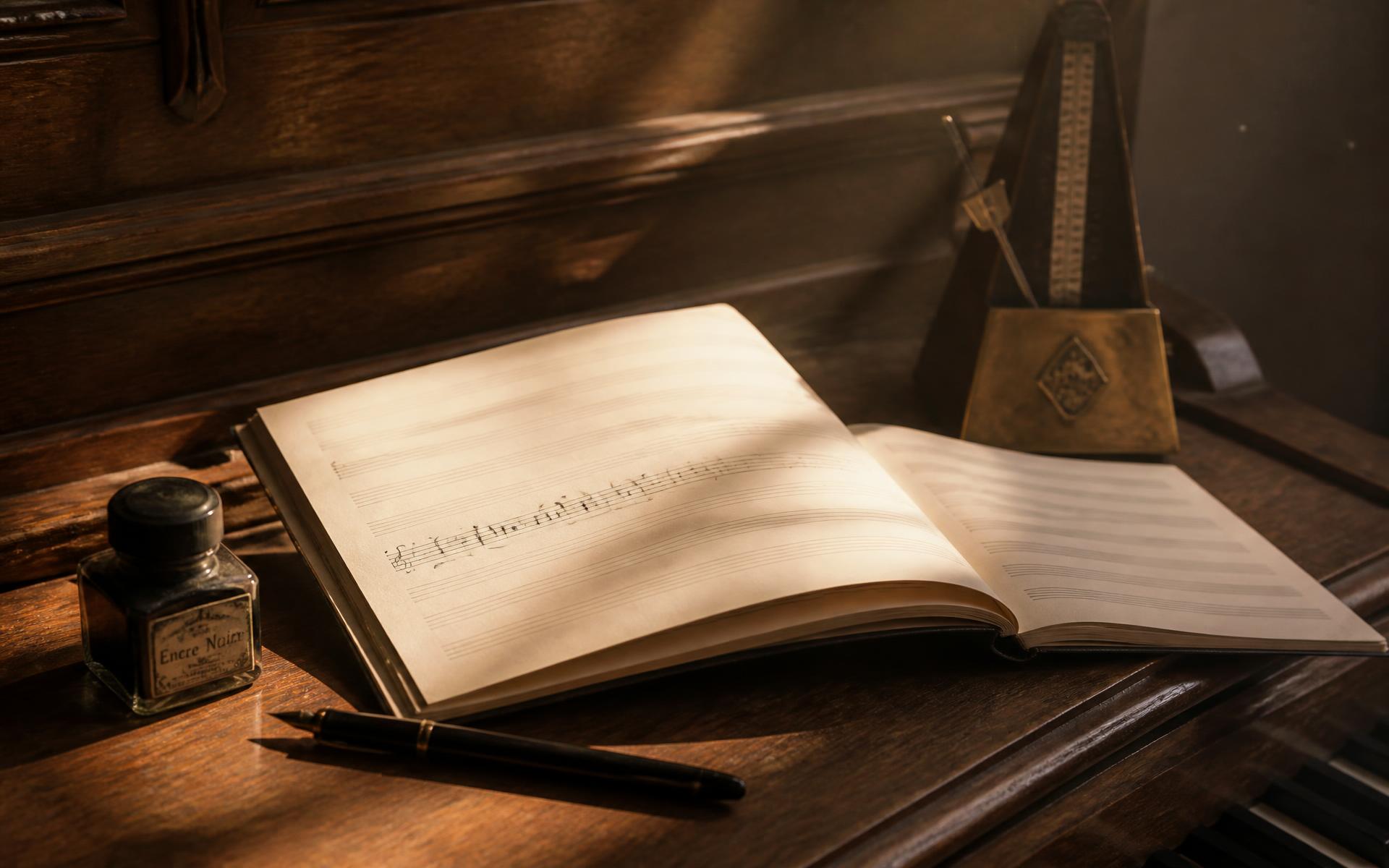
We don't compose on screens. We compose on paper. The Manuscript teaches the tradition of writing music by hand, as composers did for centuries. Technology exists only to support the process — never to replace it.
How the workshop works
Sit down
Manuscript, pencil, eraser, piano. Prepare the desk before the music.
Observe
Study a page by Chopin, Bach or Ravel — how they thought, not what they wrote.
Write by hand
No screen. No playback. Every note onto real manuscript paper.
Reflect
What was I trying to express?
Photograph the page
Only now does the technology appear.
Listen back
The app plays your handwritten music.
The historical workshop
Not copying the masters. Learning how they thought.
Chopin
Manuscripts
Ink so fluent it looks improvised — because it was, first.
Beethoven
Corrections
Scratched out, rewritten, fought for. Revision is the craft.
Mozart
Sketches
Ideas caught mid-flight, before they were finished music.
Ravel
Orchestration
Colour planned line by line, instrument by instrument.
What we will never build
You never enter notes digitally.
- No clicking notes
- No dragging notes
- No MIDI editor
- No piano roll
- No Sibelius clone
- No MuseScore clone
The manuscript is always written with your own hand.
The camera is the bridge
Finish a page, photograph it. The app straightens, enhances, archives and indexes it so you can find it years later — but it never edits your music.
Open the camera studioThe Library is a shelf
Not projects. Each composition appears as its handwritten first page: manuscript photos, composer's journal, recordings, revisions.
Open your shelfThe philosophy
Technology should never remove the craft. It should preserve it.
Paper first. Technology second. Music always.